You run a small service business, and it's the first of the month. The Google Ads charge just hit your card. The phone rang a few times. You hoped for more. Now two quotes sit on your desk. The ads salesperson says run more ads. The SEO salesperson says SEO comes first. Each one sounds sure, and you don't know whom to believe.
That is not your mistake. Each one is paid to sell their thing, so each one said it. Nobody was paid to look at the page your customers land on.
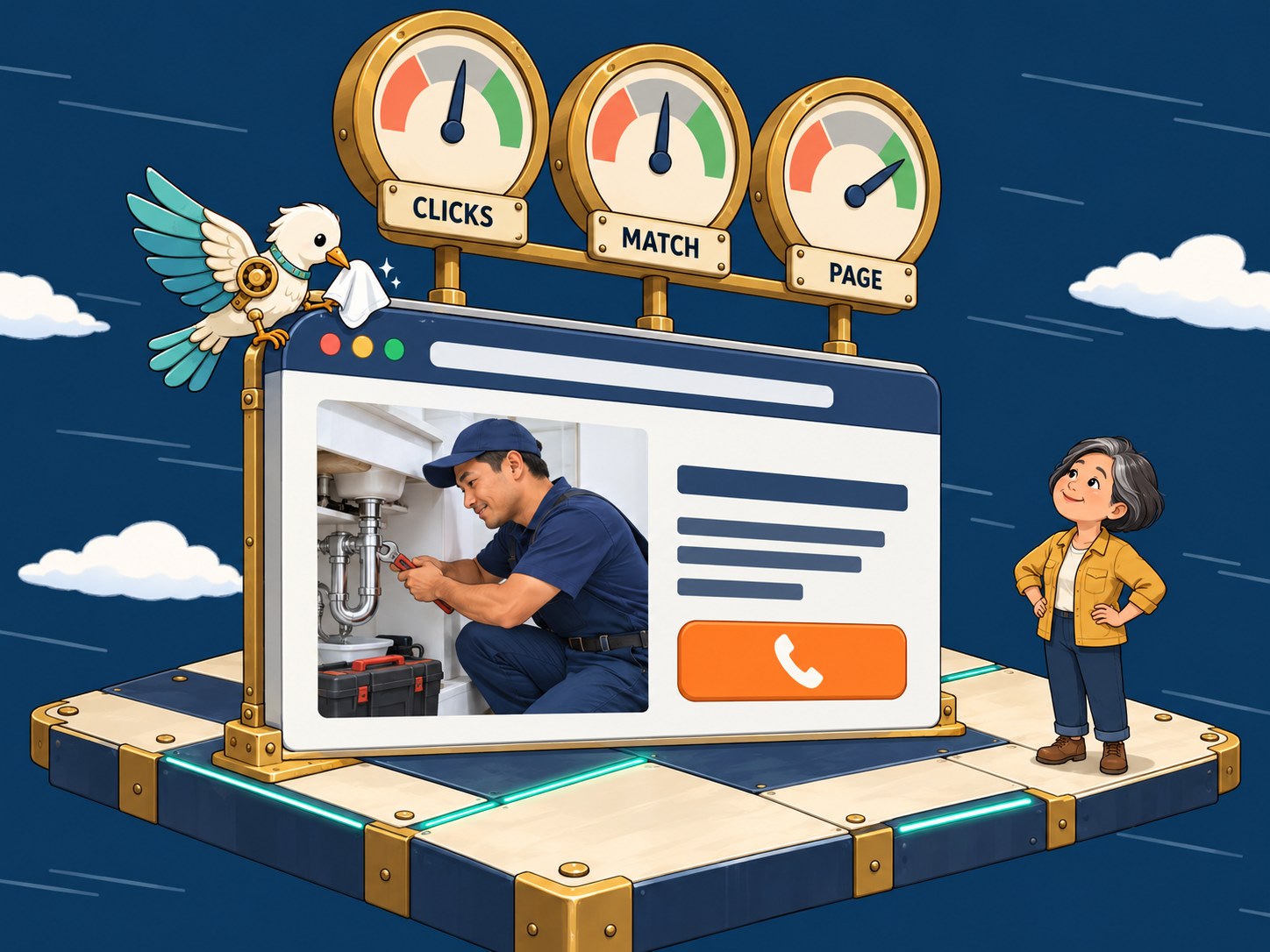
Google already grades that page, and the grade is in your own Google Ads account. Next to your keywords, look for Landing page experience. Google says higher quality ads typically cost less per click. A page rated Below average can make your clicks cost more. And that same page can show up in the free results too.
So fix the page first. Then run a small ad test to learn which searches bring buyers, while the free rankings grow. If the ads still lose money with a good page, stop them.
Before you sign either quote, ask these:
- Ask the ads seller which page each ad will send people to. If it is your home page, fix that first.
- Ask the SEO seller which searches the work is for, and check that people near you make them.
- Set a stop date for any ad test before it starts.
- If the ads lose money even with a good page, stop them. That goes for ads I run too.
Why does everyone give you a different answer?
The answers you find on Google mostly come from agencies that sell ads, SEO, or both, and each one tends to favor what it sells.
I read the first page of Google for this question on October 3, 2026. Of the 14 pages I checked, 13 came from those agencies.
I sell both too. Use one test on anyone who answers this question, me included: ask when their own service is the wrong first step. A seller who can't name that case is only selling their side. This post covers both cases: when SEO isn't worth it and when to stop the ads.
The sections below show you which one fits your business.
How are SEO and PPC different?
SEO is work that gets your website into Google's free results. PPC means pay-per-click ads, like Google Ads. The last row in this table is the one most comparisons leave out.
SEO and PPC (Google Ads) | SEO | PPC (Google Ads) |
|---|
| What you pay for | someone improving your website so Google ranks it: pages for each service, faster loading, fixes Google can see | each click on your ad |
| When people see you | after Google ranks your website, which takes time | as soon as the ad is approved and running |
| When you stop paying | your website keeps its spot in Google's free results until other businesses pass it | your ads disappear from the top of Google's results that same day |
| Can money buy the spot? | no: Google "doesn't accept payment to crawl a site more frequently, or rank it higher" | yes, and your website changes the price |
| What Google looks at | your website | your ad and your website |
How does Google price a click?
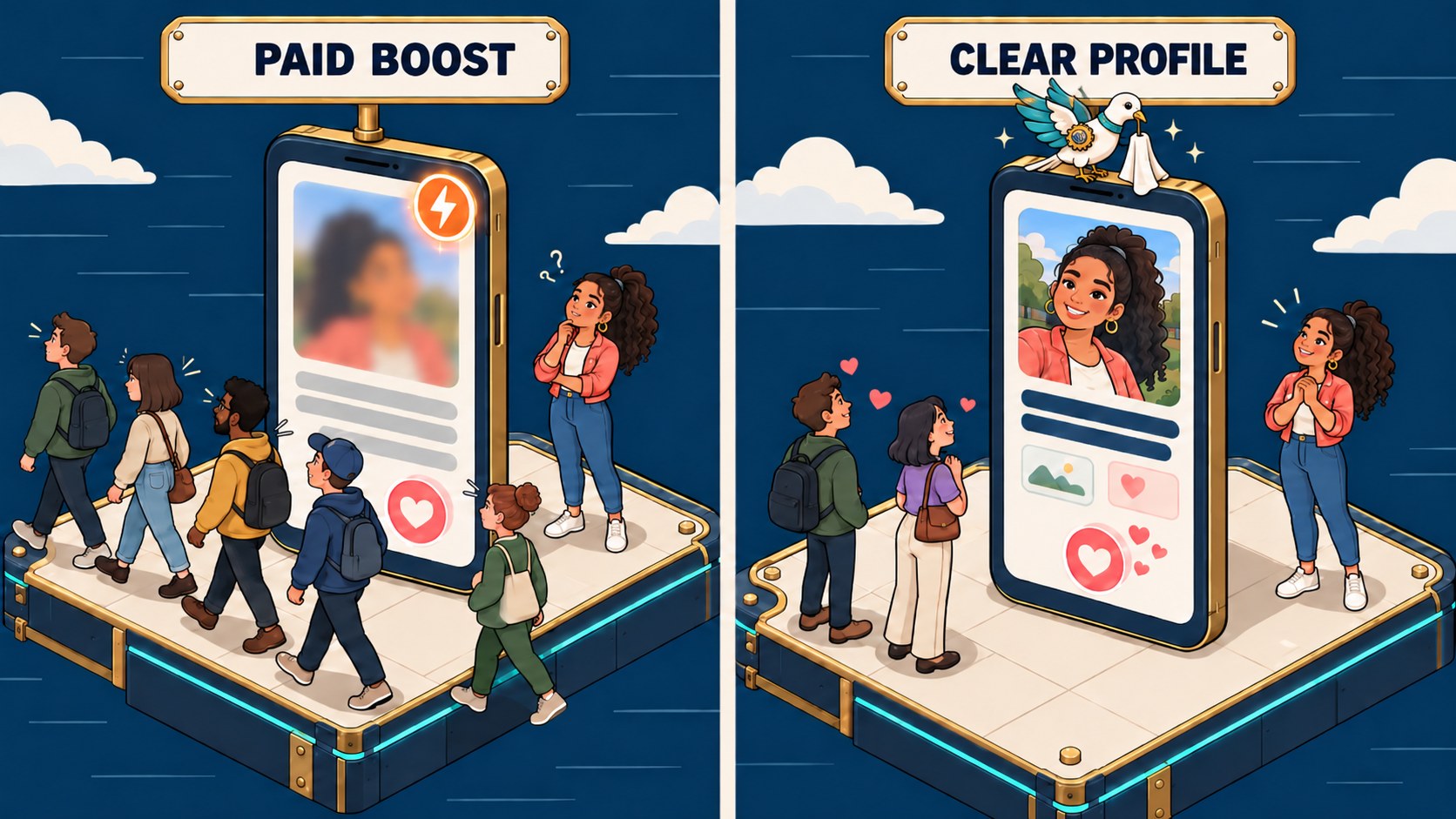
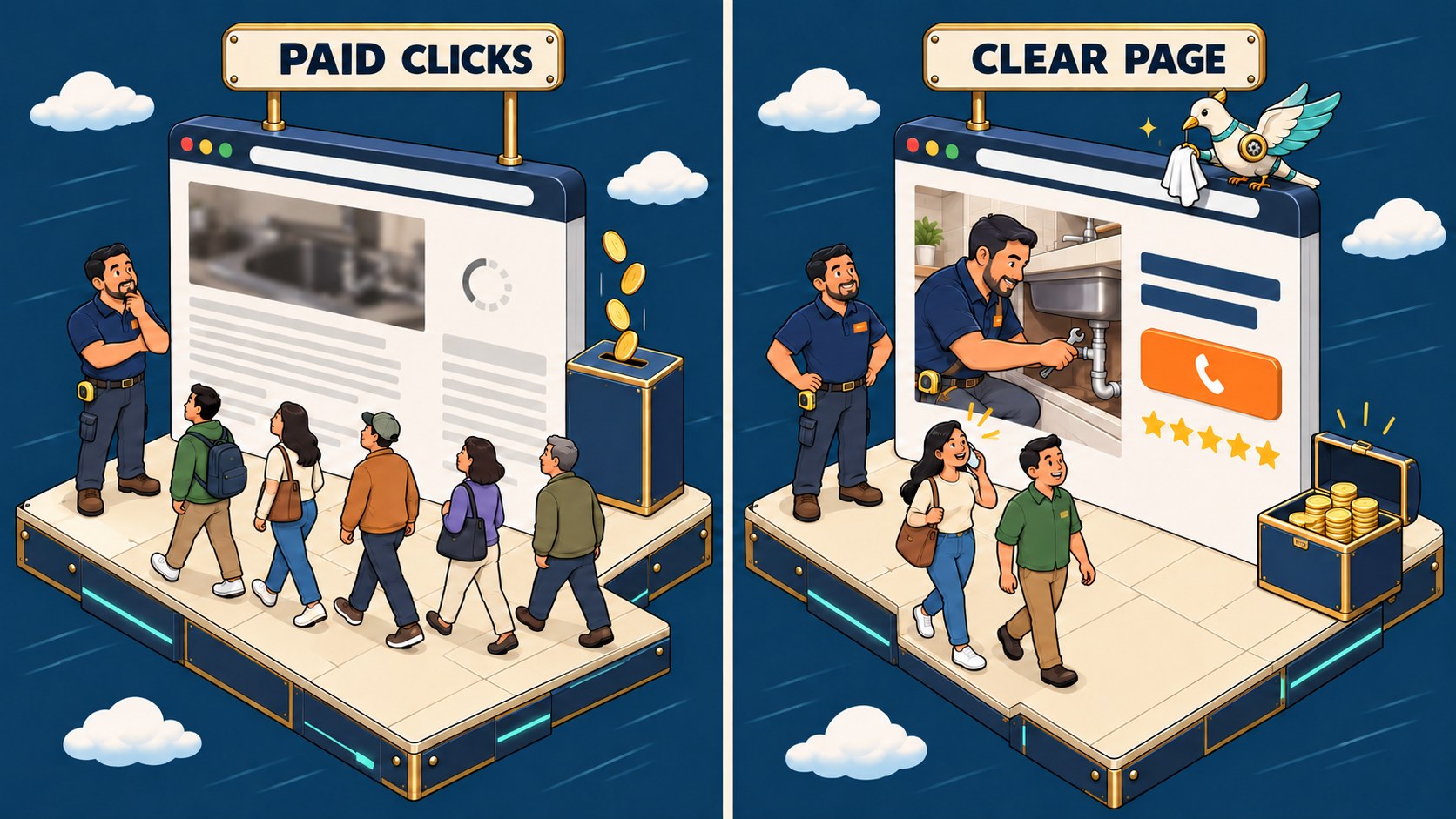
Picture your dating profile. The main photo is a blurry shot from a wedding five years ago. The bio is blank. You pay for a boost. Bumble calls it a Spotlight: "With Spotlights, you'll be seen by more people." That night, more people see you, and more people swipe past. You paid to be skipped by more people.
Left: a paid boost on a blurry profile. Right: the clear profile people stop for.
Bumble's own help page starts with the profile, not the boost. It says to "Add a great bio" and "Keep your pictures updated." It says adding prompts can "double your chance of a match."
A Google Ads click on a weak page is that same boost. You paid for the visit, and the visitor left.
Left: paid clicks to a weak page. Right: the clear page customers call.
Google Ads works the same way, with one more twist. You set a bid, but Google also grades the ad and the page it sends people to. Google calls this "ad quality." In its own words, "Higher quality ads typically cost less per click than lower quality ads." The grade is a comparison: Google measures you against "other advertisers whose ads showed for the exact same search over the last 90 days." So a weak page doesn't just get passed over. It can cost you more for every click.
Google checks three things, and it names them like this:
What Google grades and what it means and what you can change| What Google grades | What it means | What you can change |
|---|
| Expected clickthrough rate | how likely people are to click your ad when they see it | the words and the offer in your ad |
| Ad relevance | how closely your ad matches what the person searched for | one ad for each kind of search |
| Landing page experience | Google's words: "How relevant and useful your landing page is to people who click your ad." | the page on your website the ad opens |
Is Quality Score the price?
You may have heard of Quality Score. It is the 1 to 10 grade Google shows you for each keyword. A dating app never shows you a score like that, so the picture ends there. Google says, "Quality Score is not an input in the ad auction." The price comes from the ad quality underneath it, judged again on every search.
So a weak page costs you twice. Fewer people call after the click. And Google says that when ad quality is low, your cost per click can sit close to the most you said you would pay, "even when there is low competition."
Does the page that ranks also win ads?
Mostly. Both sides ask for the same kind of page, but the ranking side cares less about how the page feels to use.
Google's ads help lists what a good landing page has. It matches the ad, loads fast on a phone, is easy to get around, and gives "useful, original information" about what you sell.
Google's search help asks for most of the same things. It says Core Web Vitals, which measure how fast and steady a page loads, are used when it ranks pages.
But the same help page says the other parts of page experience "don't directly help your website rank higher." Google will still rank the most relevant page "even if the page experience is sub-par." A fast, clear page still has to answer the search better than the pages around it.
Both sides share the page. Fix what a buyer trips over on that page, and you improve the ad price and the ranking at the same time. One more line from Google's ads help: what Google's crawlers find on your site "may be used to assess ad quality." The ads side reads your site too. Google's newer AI Max campaigns go a step further: "Google automatically sends users to the landing page from your domain that is predicted to perform best." Your whole site becomes the pool your ads pick from.
What happened when one business skipped the page?
I worked with a plumbing company in Kansas City.
In April 2026, a speed test on a phone showed the home page took about six seconds to show its main content.
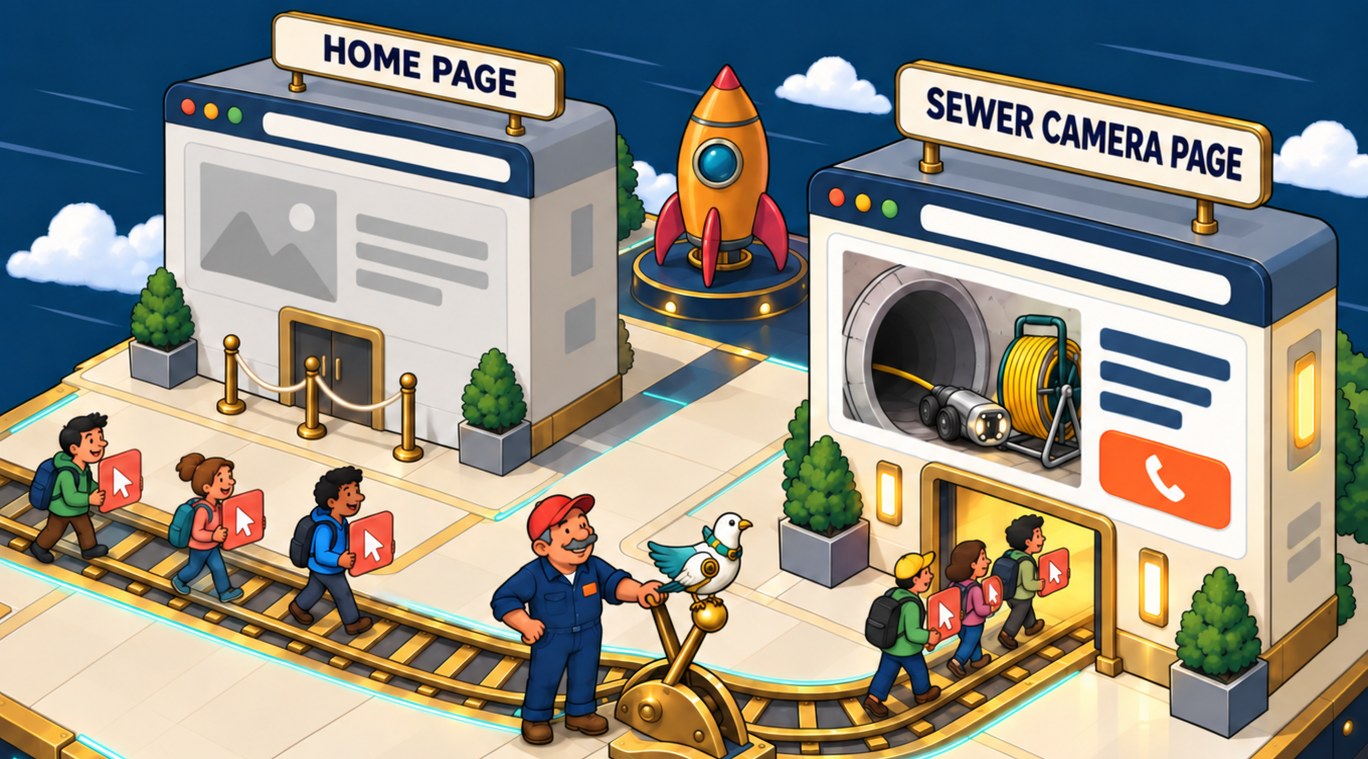
In July, I found that every ad in its sewer replacement campaign sent people to the home page. A person searching for sewer repair landed on the general home page. A full sewer repair page already existed. So did a sewer camera inspection page. Nobody had pointed the ads at them. I moved the ads to the right pages the same day.
The first fix: the ads now opened the sewer camera page, not the home page.
About a week later, I found the other half. Google search had shown that same sewer camera page 22,242 times. It got about one click. Its title in the search results was generic and did not name the city. We fixed the title and description that day.
So the business missed one page twice. The paid ads skipped it, and the free results showed it to people who scrolled past.
That one click matters more now. In the first four months of 2026, 68% of US Google searches ended with no click at all, not on an ad and not on a free result (SparkToro, June 2026). When most people never click, a title that does not name the job and the city loses the few who would.
We didn't measure the ad price before and after the move. I expected sewer search clicks to cost less, and I don't have a number to show you.
When should PPC come first?
Sometimes ads are the right first move.
Your site is new. A new site has no rankings yet. Ads can bring calls while the SEO work is done.
Your offer has a deadline. A season or a sale will end before free rankings arrive. It's the same reason people pay to boost a dating profile the week before a wedding, when they need a date.
You need to learn what buyers search for. A small ad test shows you which searches turn into calls, the way a short boost shows you which photo gets the matches. That tells you which pages to build for SEO, so the slow work goes after the searches that pay.
Your market is crowded with big names. Free rankings take longer when you are up against established companies. Ads can put you on the first page now. And Google says that even if a competitor bids more, "you can still win a higher position at a lower price by using highly relevant keywords and ads."
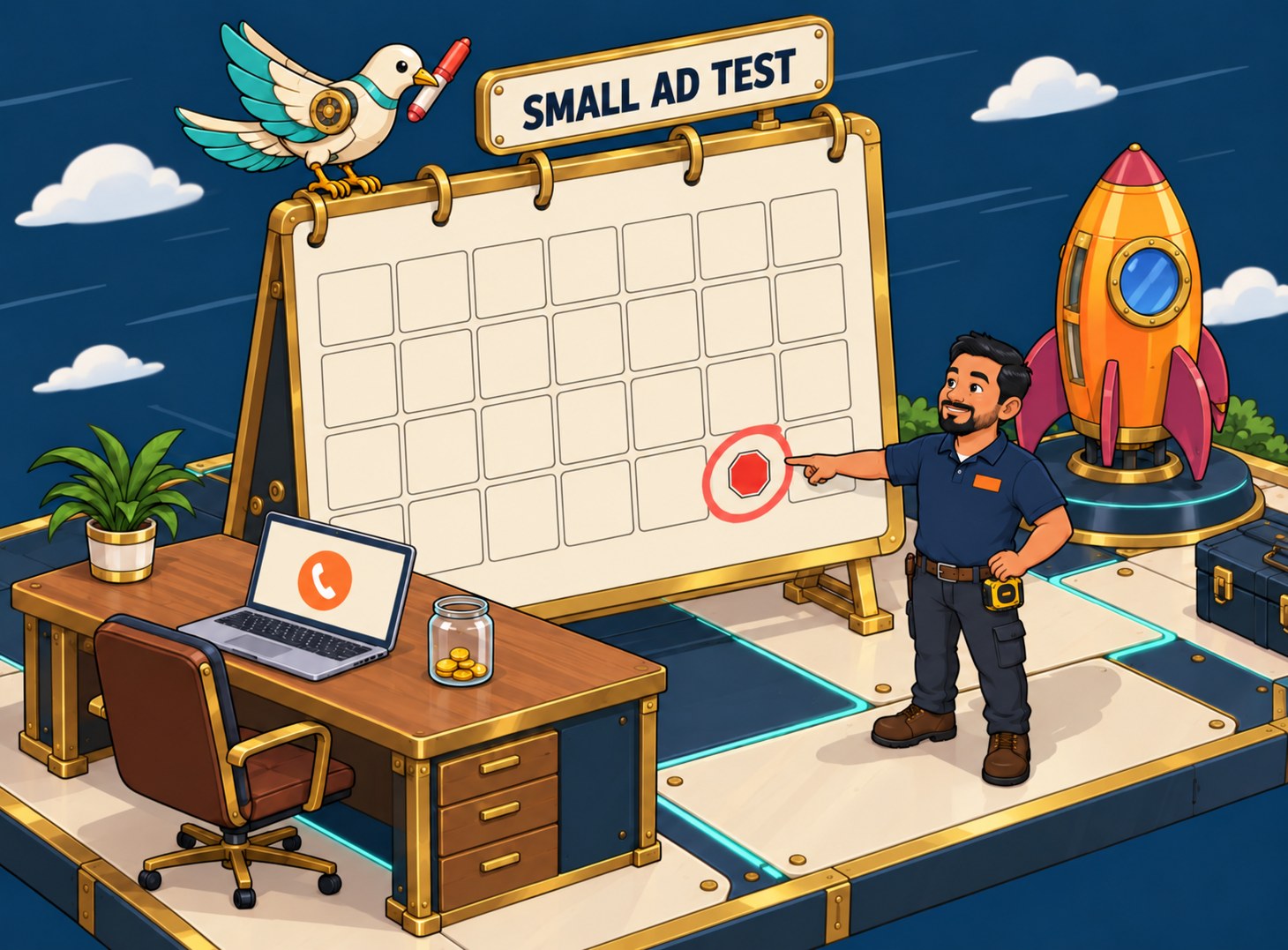
Keep the test small and set a stop date before you start. Write down the cost of one new customer that would make the test worth it. If your customers come back year after year, count what a customer is worth over those years, not just the first job. If you cannot name that number, you are not ready to spend. Give the test long enough to learn before you judge it. We tried it for a month and it did not work covers what one month can and can't tell you.
Set the stop date before the test starts, not after the money runs out.
As the free results start bringing you jobs for a search, check whether you still need to pay for that search. Do it once a month. Over time, you can move more of the budget to the work that keeps paying after you stop.
When should the page come first?
It comes first when the page your ad would send people to has a problem a buyer would notice. Check these before you spend a dollar:
Does the ad lead to a page about the thing they searched? A search for sewer repair should land on sewer repair, not your home page. If your ads cover several kinds of searches, each kind needs its own page. Someone pricing a repair and someone with water on the floor want different things.
Can someone call you from a phone without hunting? Google's own advice is to put the important information near the top.
Does the page say something only you would say? Your prices, the area you serve, how the job works, real reviews.
If any answer is no, fix that first. Every day the page stays weak, each click can cost more than it should.
Left to right: a blurry profile, paying to boost it, everyone walks past, and the fixed profile that brings people in.
Real work photos and reviews: the profile people stop for.
What about the map results?
If you serve a local area, there is a third place to show up: the map. You can't buy your way up it either. Google's help page says, "There's no way to request or pay for a better local ranking on Google." It also says, "Local results are mainly based on relevance, distance, and popularity." Your Google Business Profile, the listing that shows on the map, has to match what people search for. So the map works more like SEO than like ads.
One paid spot above the map for many service businesses is Local Services Ads, where you pay per lead instead of per click. Here the dating picture is almost literal. Google ranks your Local Services Ads profile on "Your rating, number of reviews, average response time, use of high-quality images, the verification checks you have completed." And Google says, "Higher quality profiles, including those with images, may rank higher and may also pay lower costs per lead." Missed calls count against you too. Answering fast helps you whether you pay or not.
Is PPC or SEO more measurable?
PPC is easier to measure because the ad platform counts every click and what you paid for it. That only holds if the count of real customers is right. If you are not sure it is, read Running ads with broken tracking before you trust either number.
Which costs you less per customer, PPC or SEO?
Use your own numbers, not mine. Type them into the boxes. Count your ad clicks plus anyone you pay to run the ads. The tool shows the cost of one new customer from ads and from SEO side by side.
Does your area have enough searches for ads? The Google Ads Budget Calculator tells you in a minute.
On October 5, 2026, Google added a "main content" section to its guide for site owners. It counts calculators and online tools as part of the page. It also says the people who check search quality look at how much real work went into it. In Google's guide, attribution means naming your sources. Its own words: "Attribution or giving credit to other sources doesn't replace the need for original effort." That is why the calculator above uses your own numbers, not mine.
Where can I see this in my own Google Ads account?
You can look tonight. In Google Ads, open Campaigns, then Keywords. Click the columns icon at the top right of the table. Open the Quality Score section and add the column called Landing Page Exp.
Each keyword will read Above average, Average, or Below average. If you see Below average on the keywords you spend the most on, the page is where to start.
There is a second report most owners never open, and it answers the question in this post one search at a time. It is called the paid and organic report. Link your free Google Search Console account to Google Ads, and Google says you can "learn how often pages from your website are showing in Google's free organic search results," right next to your ads. Look for two things. Searches where you already get free clicks may not need as much ad money. Searches where you get neither are the pages to build next. I learned this report for Google's ads exam years ago, and it is still the fastest way I know to see SEO and PPC on one screen.
When is SEO not worth it?
SEO isn't always the answer either, and I sell it.
You need jobs this month. SEO is slow to start. A small ad test can bring calls while you wait.
Nobody near you searches for what you sell. If no one searches for it, there is nothing to rank for. Type your area's monthly searches into the Google Ads Budget Calculator to see how many there are.
Nobody will keep the page up to date. Prices change, and services change. A stale page stops matching what people search for.
Find the line that sounds most like you.
Your situation and start here| Your situation | Start here |
|---|
| Your site is new, and you need calls now | a small ad test, and start the SEO work the same month |
| Your ad would land on a page that doesn't match the search | fix that page first |
| You have a busy season or an offer with an end date | ads for that window |
| Customers compare for weeks before they call | SEO first, with pages that answer their questions |
| Few people near you search for what you sell | neither yet: check the searches before you spend |
| Your ads already bring jobs for less than a job is worth | keep them, and move budget as free results take over |
When an agency sends you a quote, ask what each line buys. One line may bring new calls this month. Another may keep the calls you already get, like moving to a new site design without dropping off Google. Another may fix the page that ads and search both send people to. A test is fine too, as long as you write down the stop date before you pay. Carolyn Shelby wrote about this for big companies in Search Engine Journal on October 7, 2026. Her words: "The budget has to reflect what the business is actually purchasing."
If someone sells you a separate "AI search" package, ask which lines are new work. Google says its AI answers need no special steps beyond the work that already helps your page show up. A new name on the same work is a second bill for one job.
When should you stop the ads?
This will not help you if your ads lose money even with a good page. When that happens, I tell the owner to stop the ads, even if stopping means I don't get the job.
A good page lowers the cost of a campaign that already works. People still have to search for what you sell, and each job still has to be worth more than the clicks it took to win. Run your numbers in the tool above first.
Would you pay to boost that profile?
Open your Google Ads account tonight. Next to your keywords, find Landing page experience. If it says Below average, your ads are boosting a blurry photo. Fix the page first: make it load fast on a phone and say what you charge. Then decide on the boost with your own numbers in front of you. The people who find you for free will see that same page.
Questions people ask about SEO and PPC
Should a small business do SEO or PPC first?
Fix the page your ads will use first. Then test ads small, with a stop date, while rankings grow. Start with ads if your site is new, your offer has a deadline, or you need to learn which searches bring buyers.
Which is better for my business, PPC or SEO?
The better one brings you a customer for less money. The calculator above shows which one is cheaper for you.
Which is cheaper, SEO or PPC?
Ads charge you for every click. SEO charges for the work, and the clicks are free once the page ranks. The cheaper one brings you a customer for less, and the calculator above shows which.
PPC is easier to start: an ad can run the day it is approved, but you pay for every click while you learn. SEO is slower to start, and the clicks stay free once a page ranks.
Does PPC work faster than SEO?
Yes. An ad can show the same day it is approved. SEO waits for Google to find, read, and rank the page. How long each one takes is its own post.
Can I run SEO and PPC at the same time?
Yes, once the page is ready. Use the ads to learn which searches bring jobs, then build pages for those searches so you pay for fewer of them later.
Does a bad website make Google Ads cost more?
It can. Google says higher quality ads typically cost less per click, and the landing page is one of the three things it checks. Google publishes no exact formula.
Will running Google Ads help my SEO?
Google says, "Investment in paid search has no impact on your organic search ranking." What helps both is a better page.
Do paid ads last longer than SEO?
An ad lasts only as long as you pay for it. A page that ranks keeps showing after you stop paying until other businesses pass it.
What happens when I stop paying for PPC?
The ads stop showing the day you stop paying. Your free rankings and your map listing stay. They can slip over time if competitors keep improving and you don't.
Is SEO still worth it now that Google shows AI answers?
Yes. Google says, "There are no additional requirements to appear in AI Overviews or AI Mode, nor other special optimizations necessary." The same work on your page counts there too.




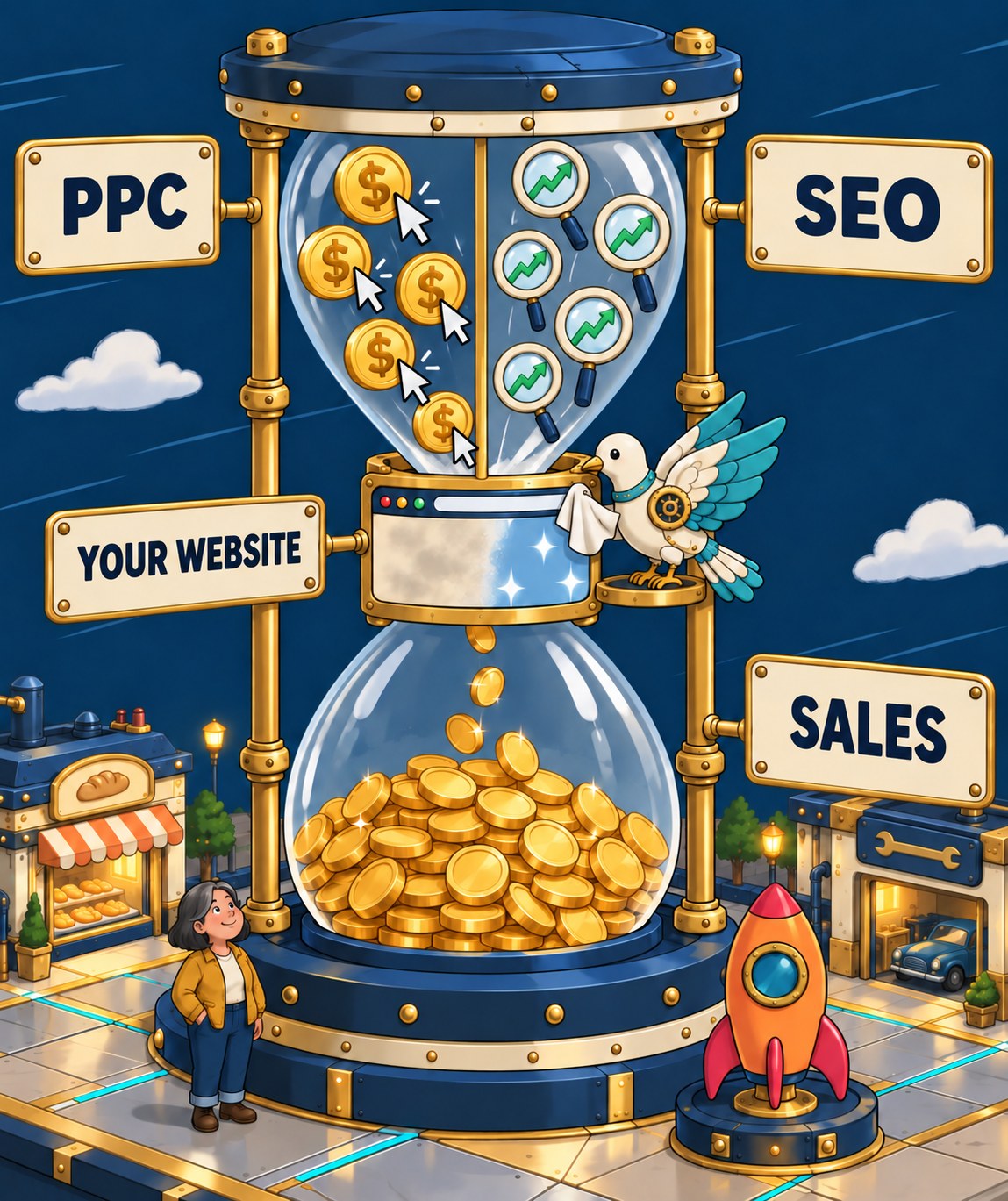
 PAID · PPC

 FREE · SEO
 Wrong page? They leave, and you still paid for the click.